
Thursday, August 17, 2006

PSP's Racially & Sexually Charged Ads


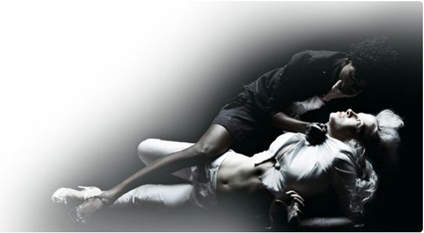
Lots of people have already noted how racially charged these print ads have been for the portable Sony PSP-- but few have pointed out how strongly they objectify the women within them. The ads, done by TBWA, were eventually pulled.

As you can see, a caucasion women dressed in white dominates a black woman, dressed in black. In the other picture, the reverse happens. It's supposed to show the struggle to pick what color (black or white) is better for your PSP. Instead, it shows women competing as sex objects, wanting to be top bitch. The poses and expressions are also very savage; the women are animals.

The only reason that this ad was pulled was for the racial content-- not the gender issues. I'm not trying to downplay the racial disparities at all, just trying to point out that gender inequality shouldn't be overlooked.

Thursday, August 10, 2006

...you mean I don't?

I took a cab home yesterday (an unfortunately rare treat) and on the way, near the BAM in the Flatbush area, my cab passed another cab with one of those triangular ad spaces on top. It was an ad for Diane von Furstenberg cosmetics, with her signature pink lips graphic, and the phrase "Feel like a woman!" splashed across the top.

As soon as I saw it, it got me thinking. I'm a woman. Do I feel like one? What the hell is it supposed to feel like (besides the PMS bullshit). The ad suddenly made me question whether or not I even felt the way I was supposed to... all thanks to a phrase.

It doesn't take an idiot to realize that they're trying to simply sell designer clothes and cosmetics, and want to tap into the modern women's urge to sometimes indulge her feminine side. Still, it was troubling that the wording initial made me question what I'm supposed to feel like.

I did a little research this morning, and came across this little article in New York Magazine. Originally, in 1976, her slogan was "Feel like a woman. Wear a dress." Talk about a backlash against the pantsuits and jeans of the era...

Wednesday, August 09, 2006

Fratire vs. ChickLit

Fratire? What does this mean for women? Does it mean anything? Or are guys becoming just as packaged and manipulated as women? (Probably. Who these days isn't?)

Tucker Max, in his post on the HuffingtonPost, goes on to say/write some things about feminism I'm not entirely sure I agree with, but I do agree that this surge in "masculinity" and the creation of fratire is related to feminism. As he says, the ideas of feminism, and esp. extreme feminism, can't exist in a vaccuum. It affects other people, other ideas, etc.

Something that he said that I also agree with (for the most part) is that Fratire isn't neccessarily against women as a gender. Some of the authors/bloggers might be (as he is himself quite often), but as a movement, it's mostly a celebration of brash masculinity and beer. As he points out, women are a fan of both his site, and Maddox's. (Yeah, I do read the Best Page in the Universe.)

Now, I'm just trying to figure out... why, if both ChickLit and Fratire have fans, and I suppose a respective place on someone's bookshelf, does it make me feel uneasy? I think it's because both genres seem to be rather limiting, and pigeonhole both the readers and the authors quite quickly. The Shopaholic books, or Nanny Diaries, etc, are for a select group of people... they seem like the "pulp classics" of today's world, along with romance novels (ewww).

[EDIT: And, as I grow more familar with Tucker's book & site, it seems he details the exploits his drunken exploits with equally drunk women. Shall we say, a "Girls Gone Wild" for the literaries? Give me humor, give me wit, but please, give me taste and perhaps a shred of respect. Interestingly enough, it seems Tucker (and a few other Fratire writers) seem to realize that they're complete assholes, though they seem to think its part of their appeal. Really though, it just validates and confirms drunken, assinine behavior across college campuses nationwide.]

Just as certain people like Westerns or mysteries, I guess there's a spot for these "new" genres as well. Not on my shelf though.

Does sex sell? Why?

A much more in-depth post from AdRants, definitely raises some good questions and examples about sex in marketing. Steve writes:

"Noting there are far more ads that feature scantily clad women then scantily clad men, one might argue there's a tremendous unfairness going on. True, perhaps, but all one has to do is take a quick look at that industry that knows more about human nature than any marketer ever will, the porn industry. It's focused almost entirely towards men. Why? Because men want it. Men like it. Men need it. Men are attracted to it. The exact same way men are attracted to sexually laced advertising. The approach doesn't always make a great ad but, all other strategies aside, it is most certainly a powerful motivator."

My response: Sex isn't something we should censor, or ignore or hide. We shouldn't live in a puritan society. But, at the same time, so many people take their cues from advertising, and so much negative imagery is out there, showing thin, writhing women showcasing all sorts of products. It might sell, but surely there is a place for sexy and responsible advertising. What might that look like you ask? I'm not entirely sure, but I think it could exist. Any ideas?

Not to mention, when you cater to all of those slathering guys, you're ignoring half of the consumer market: the women. It's interesting how women are stereotyped as shoppers, but not nearly marketed to like a powerful segment of the consumer world. Women have more money and more independant purchasing power than ever. Show us some sexy guys, we'll buy your product.

Quick Link

Just a quickie link to a new post on AdRants. "Plus-size" marketing is on the rise, and he links to a new study done by NetPlus Marketing.

Tuesday, August 08, 2006

Remember Keri Russell?


I just heard that she's the new face of CoverGirl. (Yeah, this is older news, but I've been a little out of the loop. CoverGirl, Maybelline, whatever.)

It's interesting (and sad?) to note how strongly women performer's screen presence and resonance seems tied to their physical appearance. A haircut didn't change her acting abilty (at least, I hope not), but it definitely changed how people percieved her. She was pretty talented on Felicity, but her haircut proved more fatal than Samson's.

Anyway, watch the commercial if you want. Her trademark curls are gone, much like her early successes.

* Just a note on the spot itself-- did you notice how the only visible "bad guy" she takes out, besides the shadow-figures, was a black guy? :(

Agency: Grey Worldwide

Friday, August 04, 2006

Don't Die for a Diet


One in a hundred adolescent girls has anorexia (ANRED). With pressure being so high on young women these days, it's surprising you don't see more PSA's targeting this growing problem. However, Houtlust, reports a terrific one sponsored by the EDA, the Eating Disorders Association in Britain (with this tie-in site too).

Eating disorders can kill. While the Internet has made it easier than ever to get help, it's also made it easier to support having a disorder, with "communities" and "support groups" trading tips and pointers on how to hide the illness and lose weight faster-- a sort of twisted Weight Watchers. Even code words are used: Ana, for anorexia, Billy, for bulimia.

Watch the PSA. Eat healthy. Force a burger into Kate Moss's mouth.


Agency: AMV BBDO, Proximity London.