Friday, June 09, 2006

Whopperettes!


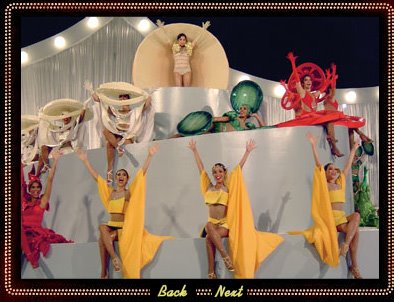
Busby Berkeley would have been proud: Burger King splashed out recently with a huge ad campaign that aired on no other night than the Super Bowl, and has a tie-in website. Each ingredient is represented by a woman in costume, and man, those costumes look elaborate and heavy!

The website itself is a little creepy-- you're prompted to enter your name, which the site actually addresses you by with a creepy voice-over if you're idle too long. You can then customize which ingredients you want on your own Whopper, and then watch the Whopperettes assemble it. A little much, perhaps. Makes you wonder how many people will visit the site, will remember Whopper vs. Big Mac, etc. The customization features fits in nicely with BK's current slogan "Have it Your Way," even if it is a tad Big Brother-esque.

Burger King's campaign is fun, and while it takes objectifying women to new heights (they're not just women, they're ingredients!) it seems to be more in the spirit of play than of actually believing women are all that vapid. Kudos on the art direction.

Autopia Car Sense.

Wired's Autopia recently posted a little article comparing car ads from the 1970's to those of today-- as they point out, little has changed. There's still a huge emphasis on sex and swooning women. If I had to think of some of the most successful car and auto advertisements, they aren't focused on sex (Honda's Cog and Grr spots respectively). So what's the fascination with leggy women and autos? Do guys really think a big truck or a really fast car will compensate for other uh... shortcomings?

Adicolor Podcasts

Adidas recently commisioned seven different directors to helm viral spots based simply on a color- this was used to hype the launch of the new Adicolor line of shoes. (You can color them yourself!)

While White might not be that amazing, primarily relying on Jenna Jameson's wrack to make it's point, Pink and the other films are amazing works of viral video. Pink's story is intriguing, using some strong art direction to back up an odd little tale that definitely ends too soon-- half of it's quicktime play bar is taken up by credits. Supremely abstract, I'm still struggling to figure out if there's greater meaning to Pink, or if it's just eye candy? Either way, that bear is creepy.

Chantelle


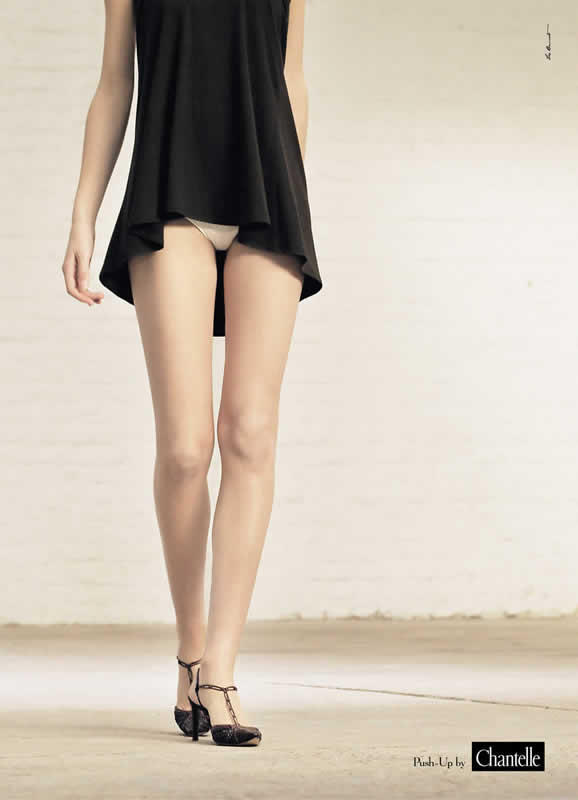
Sex sells, but when you're selling a push-up bra, that's usually the case... This ad for Chantelle bras is ingenious- strong imagery, no copywriting needed.

Thursday, June 08, 2006

Coke's "What Goes Around..."


Nagi Noda is about to be a big name. The director of this new spot for Coke, she perfectly executes the breif, adding flavor, fun, and depth to a simple story that plays on the "pay it forward" theory-- pass along a Coke, and ultimately, the favor will be returned.

The twist on this? Noda's use of visual repitition: almost like taking many freeze-frame photos, the spot uses duplicate actor stand-ins as we pan and weave through this fantasy world. Each actor strikes a pose, like keyframes in an animation that tell a story. It's a technique that's signature Noda-- she's used it before to great success (it got her a D&AD Award) with the music video Sentimental Journey for singer Yuki. And, believe it or not, there's no CG involved.

This spot definitely harkens back to "Classic" Coke-- Jack White's (White Stripes) nostalgic track floats along, perfectly matching the colorful visuals. Like older spots however, it could be seen to draw on older stereotypes-- the innocent girl in the beginning is almost like a Red Riding Hood; however, when she passes her Coke along, her innocence and generoisity isn't betrayed, and instead, she's rewarded in the end.

It'll be worth keeping an eye on Noda to see what she comes up with in the future. Whether she sticks with this visual style or not, her future work will probably continue to have her cheerful mood and tone.

Wednesday, June 07, 2006

Dove's Real Women Campaign


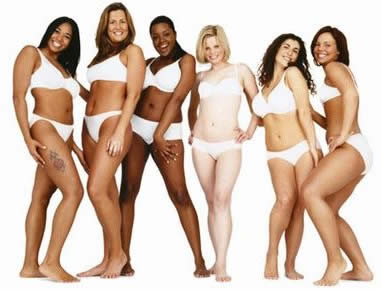
What's behind the success of Dove's "Campaign for Real Beauty"? Dove's website and advertisements (print and television) feature healthy and vibrant plus sized, older, freckled, etc, women. The ads are then coupled with statistics about body image and self-esteem ("Only 2% of women label themselves as beautiful.")

Considering this campaign is coming in a field where we usually see waifish blonds, perfect legs, and not a hint of cellulite, it's certainly been making waves in the marketing world (Brand Channel also has a pretty good rundown on it here.), and generallythe campaign is considered a success-- but why this approach and can Dove keep it up?

Dove states on its site that it chose this campaign because "For too long, beauty has been defined by narrow, stifling stereotypes. Women have told us it's time to change all that. Dove agrees. We believe real beauty comes in many shapes, sizes and ages. That is why Dove is launching the Campaign for Real Beauty.

Dove's global Campaign for Real Beauty aims to change the status quo and offer in its place a broader, healthier, more democratic view of beauty. A view of beauty that all women can own and enjoy everyday."

Democratizing beauty and smashing stereotypes? Sounds good. We've been putting up with unhealthy ideals for all too long-- to the point where girls form clubs and pro-support groups around thier eating disorders. A campaign that supports realistic body images and real women being healthy is definitely going to be viewed in a positive light, and will set that brand apart from others in the field, which is what Dove's counting on. (Much like Body Shop's success with their stance on animal rights.)

Despite all of these positive and supposedly revolutionary ideas, Dove still aims to do one thing: sell skin care items. As Seth Steverson of Slate points out "...in the end, you simply can't sell a beauty product without somehow playing on women's insecurities. If women thought they looked perfect—just the way they are—why would they buy anything?"

He's got a valid point. These women might be hefty, freckly, or really wrinkled. But their skin has got to be perfect. None of the women within this campaign have acne, flaking or dryness issues, or other skin problems. That's what you have to aspire to, and that's where the brand's traditional aspirational message kicks in: You can be fat, but your skin has better be smooth and silky.

Another good question is how long Dove can continue with this campaign. It's refreshing for now, but will a point come when we think Dove is the brand for "the rest of us?" That could spell out plummeting sales if Dove's the brand for fatties. The fallout of a marketing shift towards thin trendy models would be disasterous. They'd errode any sort of trust and brand community-base they're building, effectively shooting themselves in the foot. Given how more and more of the American public is overweight however, maybe Dove's poineering a new (and growing) market.